
About Homoeopathy
WHAT IS HOMOEOPATHY ?
Homoeopathy is a natural form of medical science based on the principle of “LIKE CURES LIKE.” Homoeopathic medicines are used by more than 200 million people worldwide to treat both acute and chronic ailments. According to homoeopathic law, remedies are chosen based on the patient’s symptoms (the exact similimum), with emphasis on treating the root cause of the disease and eliminating it completely. Since homoeopathic medicines are highly diluted and dynamic, they usually have no side effects and can be safely used by people of all age groups.
HISTORY OF DISCOVERY:
Christian Friedrich Samuel Hahnemann (1755–1843), a German physician, discovered the alternative system of medicine known as homeopathy. In 1790, while translating Cullen’s *Materia Medica*, he read about the therapeutic properties of Peruvian bark (*Cinchona officinalis*), which was believed to cure intermittent fever. Dissatisfied with the explanation and the way the experiment had been conducted, Hahnemann decided to test it himself. He took the medicine twice a day and observed that it produced symptoms similar to the ague of malaria fever.This unexpected result sparked his curiosity, leading him to conduct similar experiments with various medicines on himself and others. Based on these successful experiments, Hahnemann concluded that medicines can cure diseases because they have the ability to produce similar symptoms in healthy individuals—a principle that became the foundation of homeopathy.
CONCEPTS & PRINCIPLES OF HOMEOPATHY

The homeopathic system is based on simple and understandable principles. According to the Law of Similia, a medicine that produces certain symptoms in a healthy person can treat similar symptoms in a sick person. The Law of Simplicity states that only one medicine should be administered at a time for a given case, while the Law of Minimum emphasizes using the smallest amount of medicine sufficient to produce an artificial disease in the vital force, similar to the natural disease. The Doctrine of Drug Proving involves systematically testing medicines on healthy individuals of different ages, sexes, and constitutions, recording the resulting symptoms, which then serve as a reference for the drug’s effects. Finally, the Doctrine of Drug Dynamisation refers to the process of activating the latent curative power of a drug through succussion or trituration, enhancing its healing properties.
HOMOEOPATHY VS ALLOPATHY

HOMEOPATHY
- Homeopathy is a holistic method of treatment and works by treating the person and not a particular organ or part
- It treats the patient according to the symptoms
- It is non-toxic and does not have potent side effects
- Helps to eliminate the problem from the root
- Stimulates the immune system which in turn helps to heal the patient naturally
- Does not suppress the symptoms
ALLOPATHY
- It treats the patient according to the disease
- Most medications have some side effects
- Can affect the immune system of the body
- Shows almost instant results but suppresses the symptoms of the disease
ADVANTAGES OF HOMOEOPATHIC SYSTEM OF TREATMENT
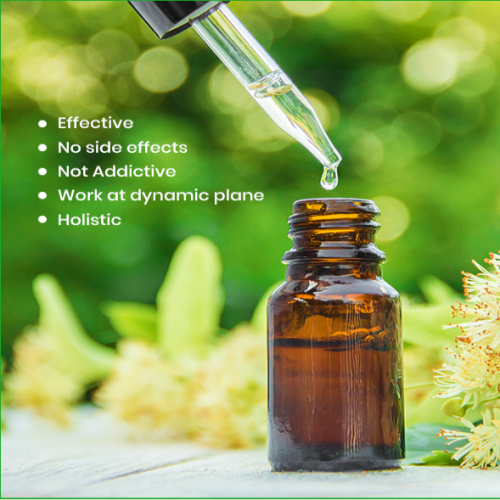
Homeopathy was discovered over 200 years ago by German physician Dr. Samuel Hahnemann, who sought treatments for diseases that conventional medicine could not cure. He observed that the prevailing system often suppressed disease rather than treating it. Hahnemann recognized that illnesses affect not only the body but also the mind and emotions; therefore, true healing requires medicines that act on all three aspects. Homeopathy is based on the principle **“Similia Similibus Curentur”** or “Let likes be treated by likes.” Remedies are primarily derived from herbs, animals, and minerals, and are administered in highly diluted, non-toxic doses to healthy individuals to observe the symptoms they produce. These observed symptoms form the basis for prescribing the medicine. When a patient consults a homeopath, their symptoms are carefully matched with those of a suitable remedy from the extensive homeopathic literature, allowing for effective, individualized treatment.
GENERAL DISEASES WHERE HOMOEOPATHY OFFERS A BETTER SOLUTION
Though homoeopathy can treat most of the diseases related to the human body, given below are some ailments patients may opt for better results –
- Allergic disorders: Bronchial asthma, allergic rhinitis, urticaria
- Skin problems: Dermatitis, Eczema, Psoriasis, Warts
- Viral fevers
- Sinusitis
- Tonsillitis
- Hair fall, Alopecia
- Liver complaints
- Renal calculi
- Piles and Fissures
- Chilblains & cracked and bleeding soles due to exposure to high altitude temperatures
- Sea Sickness
The above mentioned are all chronic problems where only temporary relief or palliation can be achieved by conventional medicines. With homeopathy, these problems can be effectively treated.
- Allergic disorders
- Skin problems
- Viral fevers
- Sinusitis
- Tonsillitis
- Hair fall, Alopecia
- Liver complaints
- Renal calculi
- Piles and Fissures
- Chilblains & cracked and bleeding soles
- Sea Sickness
Goodness of Homoeopathy

Homeopathy is a pharmaceutical science based on the laws of nature. It uses small doses of plants, minerals, and organic substances to stimulate the body’s natural defenses. The term “homeopathy” is derived from the Greek words *Homoios* (similar) and *pathos* (disease or suffering) and is based on the principle **“Similia Similibus Curentur”**, meaning “Let like be treated by like.” Unlike conventional medicines, homeopathic remedies do not suppress symptoms but strengthen the immune system and aim to remove diseases from their roots. As health concerns rise globally, alternative medicine is gaining attention for its efficacy, safety in long-term use, affordability, and absence of side effects. Homeopathy is a unique and natural system of medicine growing rapidly due to its holistic approach and proven results.
BENEFITS OF HOMOEOPATHIC TREATMENT ARE AS UNDER:-
The correct homeopathic medicine initiates the body’s natural healing gently, treating the person by strengthening their immunity. Homeopathy focuses on curing the sick individual, not just the disease, addressing conditions from their roots. Many chronic or hereditary illnesses can be effectively managed with this system. By stimulating the body’s own defenses, homeopathy enhances resistance to diseases and is safe for children, pregnant, and lactating women. It is effective for both acute and chronic ailments, often reducing the need for surgery. Its popularity stems from its simplicity, affordability, non-invasiveness, absence of side effects, and ease of administration. Homeopathic remedies can be used alongside allopathic medicines without interactions, rely on patient symptoms rather than expensive diagnostics, are widely available, and can be stored for long periods.
Myths & Facts about Homoeopathy
- Myth: Homeopathy is a placebo.
- Fact: No. Homeopathy is a proven system of medicine.
- Myth: Homeopathy is slow-acting.
- Fact: Homeopathy acts effectively in both acute and chronic cases, depending on disease severity.
- Myth: Homeopathic medicines cannot be taken with other systems of medicine.
- Fact: They can be taken alongside other medicines, with a recommended one-hour interval.
- Myth: Surgery is the only option for piles, warts, renal stones, etc.
- Fact: Homeopathy can treat these conditions successfully without complications.
- Myth: Homeopathic medicines are sweet and not suitable for diabetic patients.
- Fact: The minimal sugar content in globules is safe for diabetics.
- Myth: There are strict dietary restrictions in homeopathy.
- Fact: Only certain foods like raw onions, garlic, strong coffee, and mint should be limited as they may interfere with treatment.
- Myth: The same white pills are given for all illnesses.
- Fact: Remedies are prescribed based on individual symptoms, not uniformly for all patients.
Contact Us
Quantum Homoeopathic Energies
Rajkot, Jamnagar Highway, , Gujarat - 360006, India
Call Us : View Mobile Number
